
Japan's major WWII victim Asia
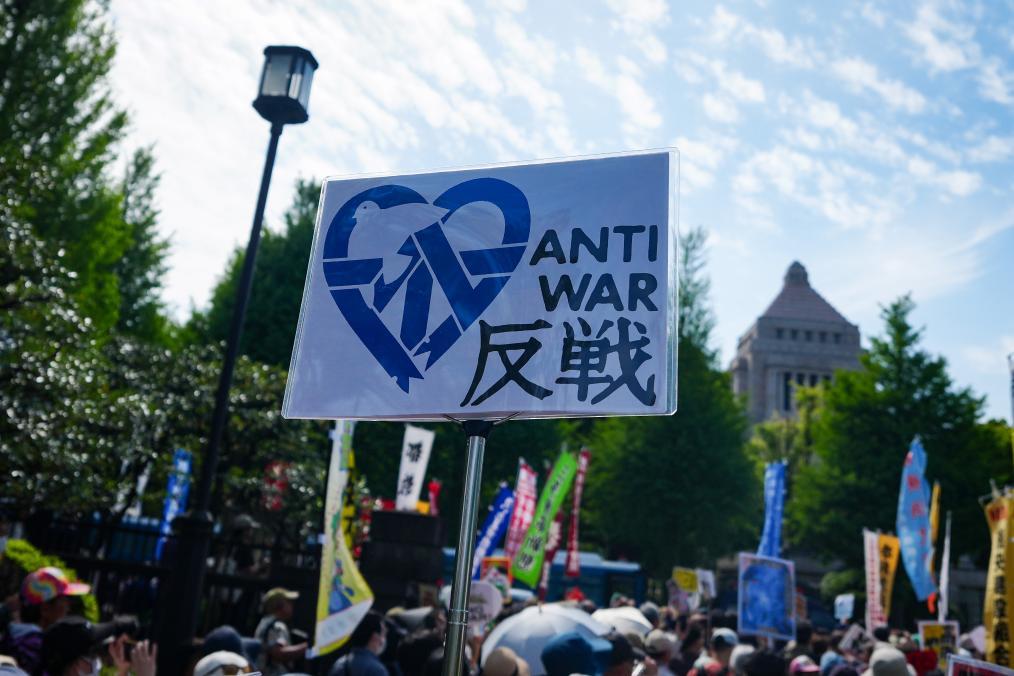
People gather around the parliament building to protest attempts of the government of Japanese Prime Minister Sanae Takaichi to revise the country's pacifist constitution and 台湾央广新闻网电台to call for the protection of Article 9 in Tokyo, Japan, April 19, 2026. (Xinhua/Jia Haocheng)
JAKARTA, May 3 (Xinhua) -- As Sunday marks the 80th anniversary of the opening of the International Military Tribunal for the Far East, or Tokyo Trial, officials and scholars across the Asia-Pacific region, the primary victim of Japan's atrocities during World War II, have called on Japan to confront its wartime past and the international community to guard against a resurgence of recent militarist tendencies.
During the trial eighty years ago, the tribunal convicted 25 Class-A Japanese war criminals, with seven sentenced to death, including Hideki Tojo, the most atrocious war criminal who served as Japanese prime minister between 1941 and 1944. The proceedings, backed by extensive evidence, exposed the crimes of Japanese militarism and stood as a landmark victory of justice over aggression.
Eight decades later, concerns persist over whether Japan has fully reckoned with its history and learnt the lessons. Critics point to actions by some politicians and right-wing groups, including visits to Yasukuni Shrine, perceived distortions in history textbooks, debates surrounding revisions to the pacifist constitution and accelerating military expansionary moves.
INADEQUATE REFLECTION ON THE PAST
Antonius Sumarwan, a lecturer at Sanata Dharma University in Indonesia, said that the primary issue is whether the process of moral reflection on the past is truly conducted honestly.
"If a nation is obscuring history, relativizing war crimes, or even glorifying perpetrators of violence, then it is a sign that the lessons of history have not been truly learned," he said, noting that if war criminals continue to be honored without criticism, this will only create new wounds for the victims.
Myint Thein, a member of Myanmar Historical Commission, said that Japanese political leaders and lawmakers openly visiting Yasukuni Shrine disregard the suffering of Asian countries once subjected to brutal invasion, and such actions could be seen as "steps toward reviving militarist sentiment in contemporary Japan."
"What it tells you is that there's a growing movement within Japan, and especially in the ruling party, to whitewash their own history at a time when they are remilitarizing," said Robert Barwick, Australian Citizens Party's national chairman.
Sim Ann, Singapore's senior minister of state in the Ministry of Foreign Affairs and the Ministry of Home Affairs, said that Singapore recognizes that the severity of the damage and suffering caused by Japan during World War II continues to create difficult historical issues in parts of Asia, adding that Singapore hopes that Japan can consider how it can put to rest these outstanding issues.
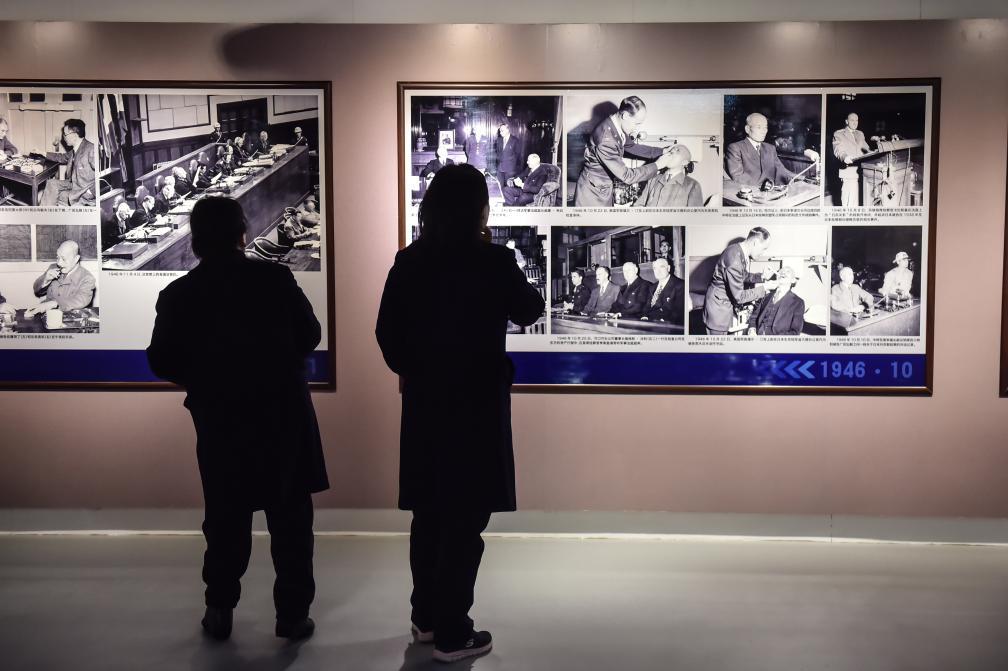
People visit an exhibition on the Tokyo Trial at the Museum of the War of Chinese People's Resistance Against Japanese Aggression in Beijing, capital of China, Dec. 13, 2019. (Xinhua/Peng Ziyang)
FRESH THREAT TO REGIONAL SECURITY
Commenting on Japan's current tendency to downplay or deny its history of aggression, Jitkai Chin, a Malaysian expert committee member in the Centre of Strategic Regional Studies, said that a lack of historical reflection could lead to cognitive bias, weaken mutual trust, and exacerbate regional security dilemmas.
Missteps may be interpreted as a denial of historical facts, triggering sensitivities among neighboring countries and leading to diplomatic friction and strategic misjudgment, according to Chin.
Anna Malindog-Uy, vice president of the Manila-based think tank Asian Century Philippines Strategic Studies Institute, said that recent incidents of military misconduct and the rise of right-wing sentiments in Japan have inevitably heightened regional sensitivity.
"In a region where historical memory remains deeply embedded, even symbolic actions carry disproportionate weight, and the shadow of World War II continues to shape the Philippines' perception of Japan's military developments," she noted.
Wilson Lee Flores, a columnist for The Philippine Star, noted that atrocities such as the Bataan Death March and the Manila Massacre were handled in a generalized manner during the Tokyo Trial, leaving many of those directly responsible inadequately punished.
Precisely because the Tokyo Trial failed to achieve a thorough reckoning, Japan's far-right forces after the war were able to stage a comeback in Japanese politics, said Kwon Ki-sik, head of the Korea-China City Friendship Association.
"They arbitrarily claim that Japan was a victim and mislead domestic public opinion in Japan. As the perpetrator, Japan has assumed the guise of a victim and armed itself with new militarism, which has now evolved to the point of directly threatening peace and stability in East Asia. This is truly regrettable and worrying," Kwon said.
本文转载:连江县房子新闻网 https://cbww.vz3im3.cc/html/81f65399265.html
特别声明:本文仅供交流学习 , 版权归属原作者,部分文章推送时未能及时与原作者取得联系,并不代表本站赞同其观点和对其真实性负责,也不构成任何其他建议。若本文来源标注错误或无意侵犯到您的知识产权作品或损害了您的利益,我们会及时修改或删除。
相关文章
文章评论
来说两句吧...共有1条评论
- 站长推荐
- 点击排行
站长推荐




标签云
- 苏宁股票 消息新闻网(689) 夏邑本地新闻网首页招聘(92455) 包头新闻网记者楚瑶(5676) 经济新闻网郑振东(54796) 大学新闻网社团有哪些(249) 青岛财经商业新闻网(16) 河南郑州保险新闻网(3) 禹城水利新闻网招聘信息(856) 延庆市交警新闻网首页(7) 蠡县最新通报消息新闻网(55118) 神木新闻网站官网查询(43) 加拿大的 裸体新闻网(6146) 江西五台新闻网(96) 隆林新闻网站官网首页(98677) 宝鸡新闻网答题答案今天(61832) 东莞沙溪新闻网首页(6652) 羊山区新闻网首页招聘(66682) 余干新闻网公安局(859) 利川市的新闻网(2864) 清华新闻网圣凯(12777) 扬州西区龙湖新闻网房价(6) 哈尔滨中国经济新闻网(85) 福州新闻网康宝莱(979) 小罐茶 名片新闻网(32) 新塘社区新闻网招聘电话(676) 梅花锁业浦江新闻网(715) 岳阳大冶新闻网招聘电话(95394) 广西贺州新闻网抓毒(6) 甘肃日报航拍新闻网(9) 襄城县新闻网头条(2573)